

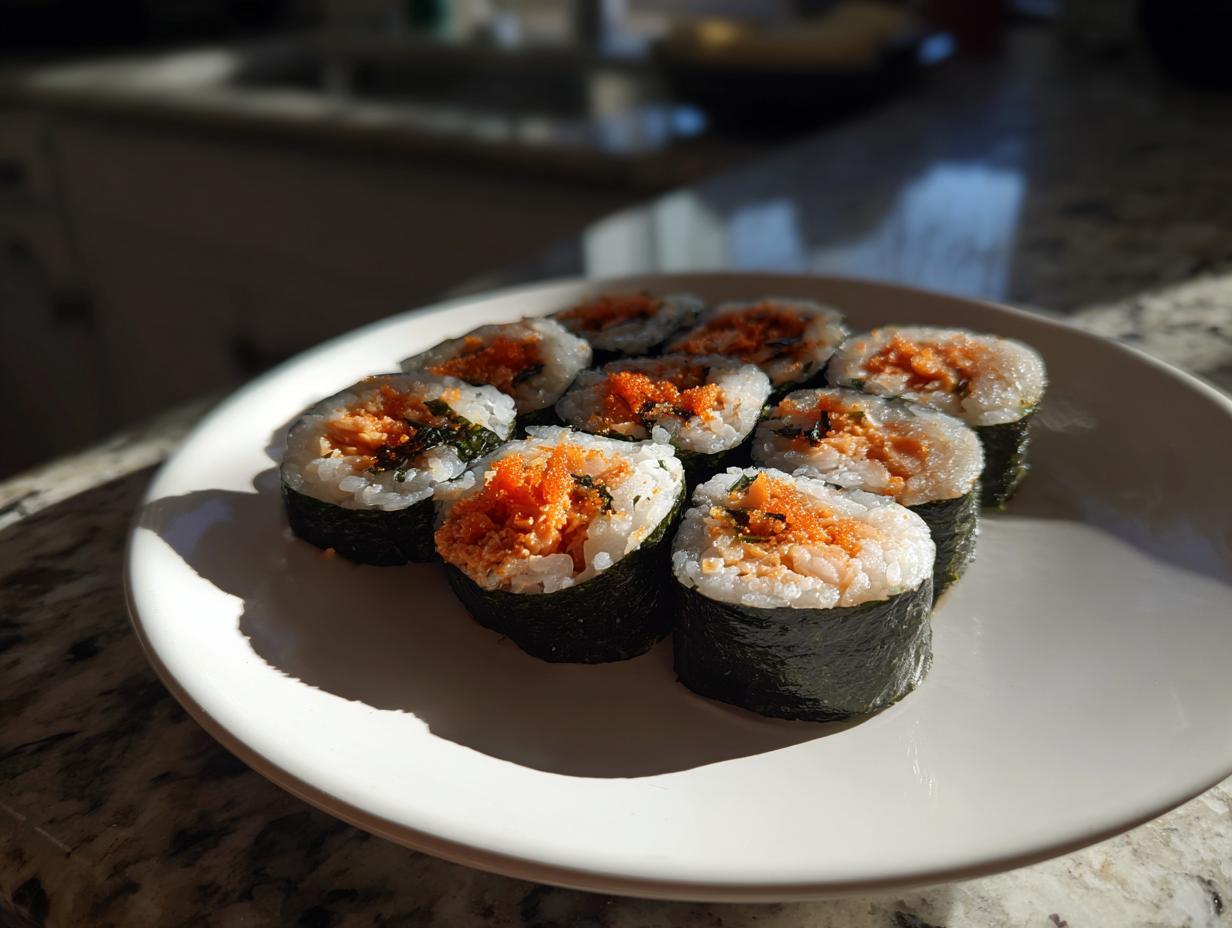
Oh, you know those evenings, right? You get that specific craving for delivery—that wonderfully savory, slightly spicy Korean takeout—but you really don’t want to wait an hour for it to arrive. Happens to me every time! That’s exactly why I perfected this **tuna kimbap** recipe. Forget complicated fillings; this is the ultimate quick fix for busy evenings or packing up next day’s lunchboxes. We’re focusing on the incredibly popular Spicy Tuna Kimbap today, thanks to a little kick from Sriracha and Kewpie mayo. As Eleanor Vance of DeliceRecipe, I promise you this: with pre-cooked rice, we have these delightful Korean seaweed rolls ready to eat in about 15 minutes flat. If you love fast, easy meals, you’ll want to check out my collection of quick, healthy lunch recipes too! Trust me, these rolls are easy, satisfying, and about to become your new weeknight staple.
- Why This Spicy Tuna Kimbap Recipe Works for You
- Gathering Ingredients for Perfect Tuna Kimbap
- Step-by-Step: How to Make Tuna Kimbap at Home
- Tips for Perfect Spicy Tuna Kimbap Success
- Storing Your Homemade Tuna Kimbap
- Serving Suggestions for Tuna Kimbap
- Frequently Asked Questions About Tuna Kimbap
- Nutritional Estimates for Tuna Kimbap
- Share Your Homemade Korean Seaweed Rolls
Why This Spicy Tuna Kimbap Recipe Works for You
When I developed this version, my main goal was making something that felt totally authentic but didn’t require hours of chopping veggies. It’s all about maximum flavor for minimum effort, which is what we home cooks really need, isn’t it?
- Speedy Preparation for Busy Days: Seriously, we’re done in about 15 minutes total! Since we use cooked rice, this truly is a genuine 15 minute kimbap recipe. Perfect for throwing together a quick snack.
- Flavorful Spicy Tuna Kimbap Filling: This isn’t your boring tuna mayo mixture. The mix of creamy Kewpie and tangy Sriracha gives you that addictive punch you’d pay top dollar for at a street stall. It’s one of my favorite quick asian roll recipes because the filling is so complex!
It’s built entirely around being fantastic homemade korean lunch box food, holding up beautifully until lunchtime.
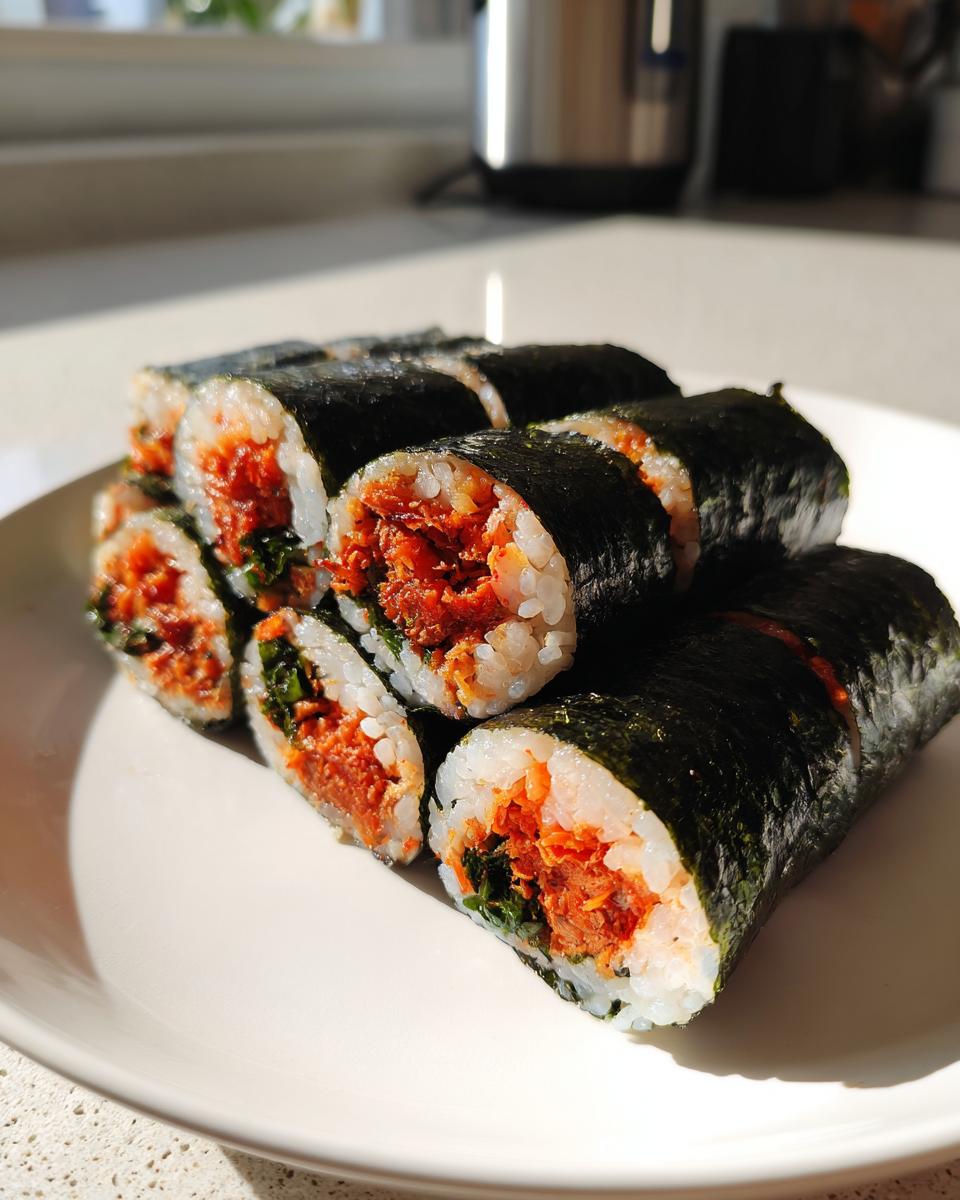
Gathering Ingredients for Perfect Tuna Kimbap
Okay, let’s talk supplies! Since this recipe relies on using pantry staples like canned tuna, shopping for this is super easy. We need to make sure everything is prepped just right, especially the rice seasoning, because those little touches make a huge difference when you’re actually rolling. This is where the magic starts for any great batch of kimbap with canned tuna.
For the Seasoned Rice Base
You’ll want your short grain rice already cooked and cooled slightly. We aren’t using vinegar here, which is a key difference from sushi! Just these simple additions give us that classic Korean seaweed rolls flavor:
- 4 sheets roasted seaweed (nori or gim)
- 2 cups cooked short grain rice
- 1 teaspoon sesame oil (for rice)
- 1 teaspoon salt (for rice)
- 1 teaspoon sesame seeds (for rice)
The Signature Spicy Tuna Kimbap Filling
This is where we build the flavor! If you find the spice a bit much, just skip the sriracha for a classic, yummy tuna mayo kimbap instead. Keep those green onions very, very finely chopped so they integrate nicely.
- 1 can (5.3 oz) tuna in oil, drained
- 2 tablespoons Kewpie mayonnaise (or regular mayo—Kewpie is better, though!)
- 1 tablespoon sriracha sauce
- 2 tablespoons green onion, very finely chopped
- 4 perilla leaves, washed and dried (if you can find them, they add such a fresh taste!)
- A little extra sesame oil and seeds for brushing the outside when finished
Step-by-Step: How to Make Tuna Kimbap at Home
Now the fun starts! This is where we turn those beautiful ingredients into gorgeous Korean seaweed rolls. Don’t be intimidated by rolling; this is the perfect point in our easy kimbap tutorial to learn. Once you get the hang of tucking that first edge, you’ll be rolling like a pro. Get your mat ready!
Preparing the Rice and Filling
First things first, we need the rice ready to go. Take your cooked short grain rice and gently mix in that sesame oil, salt, and sesame seeds. You want this seasoning distributed evenly so every grain has some flavor. Don’t mash it, just fold it together carefully.
While that cools slightly, whip up that amazing spicy tuna filling! Drain the tuna—and I mean drain it well—and combine it in a bowl with your Kewpie mayo, the Sriracha for that wonderful kick, and the finely chopped green onion. Mix it until it’s creamy. That’s it for the prep!
Assembling and Rolling Your Korean Seaweed Rolls Recipe
Time to build your rolls! Lay your bamboo mat down flat. Place one sheet of seaweed paper on top, making sure the shiny side goes *down*. Now, wet your hands just a little bit—this stops the rice from sticking to you like glue! Spread about half a cup of that seasoned rice evenly across the seaweed, but you have to leave a clean one-inch strip clear at the very top edge of the seaweed. That empty space is our sticky seal!
If you’re using optional perilla leaves, lay them right on top of the rice. Then, spoon about a quarter of that spicy tuna mixture right across the center. Now, for the roll: Lift the edge of the mat closest to you—using your thumbs—and fold it up and over the filing, tucking that first bit of rice paper firmly underneath the filling itself. Roll forward tightly, pressing gently to keep everything compact. Once you reach that empty strip at the top, dab a tiny bit of water on it, finish rolling, and seal it shut. If your mat sticks, try covering it with plastic wrap first—it makes clean-up a breeze!
Finishing and Slicing the Tuna Kimbap
Your roll should look plump and tight! Now, give the outside a light brush with a little sesame oil and sprinkle on those extra sesame seeds. Repeat this whole process.
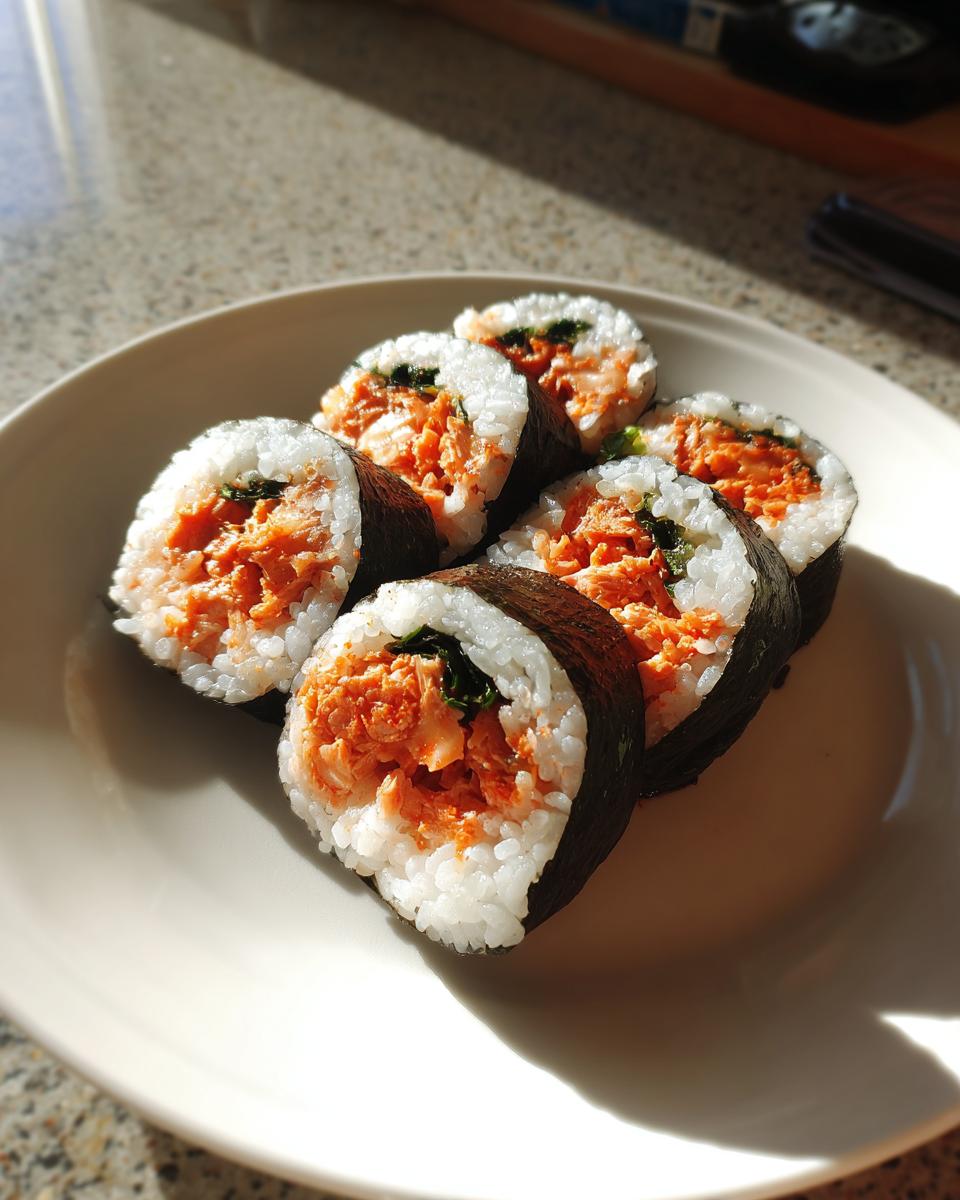
Once all your rolls are done, grab your sharpest knife and wet the blade before every single cut. This prevents the seaweed from tearing. Slice each log into about eight bite-sized pieces. Don’t saw at it; use one smooth, firm motion for those clean cuts!
Tips for Perfect Spicy Tuna Kimbap Success
I know rolling can feel tricky at first, but don’t sweat it! Practice makes perfect, and even if your first few rolls look a little wonky, they’ll taste amazing. We want to make sure you feel totally confident pulling these tuna kimbap out for your next picnic. These little pointers really helped me dial in the technique!
Adjusting Spice Level in Tuna Kimbap
My version leans into the heat, but that’s just my personal preference! If you are serving this to kids or just prefer a milder flavor, you can absolutely dial that Sriracha way back. Seriously, start with just half a teaspoon, mix it in, taste it, and go from there! You can always add more spice, but you can’t take it out once it’s in the filling.
Achieving Clean Slices
This is the game-changer, honestly. After you finish rolling your log, resist the urge to slice it right away! Wrap the entire log up tightly in plastic wrap—like a little burrito—and just let it rest on the counter for about five minutes. This lets the seaweed and rice settle together. When you go to cut it after resting, you get those beautiful, clean slices every single time. It seriously helps so much!
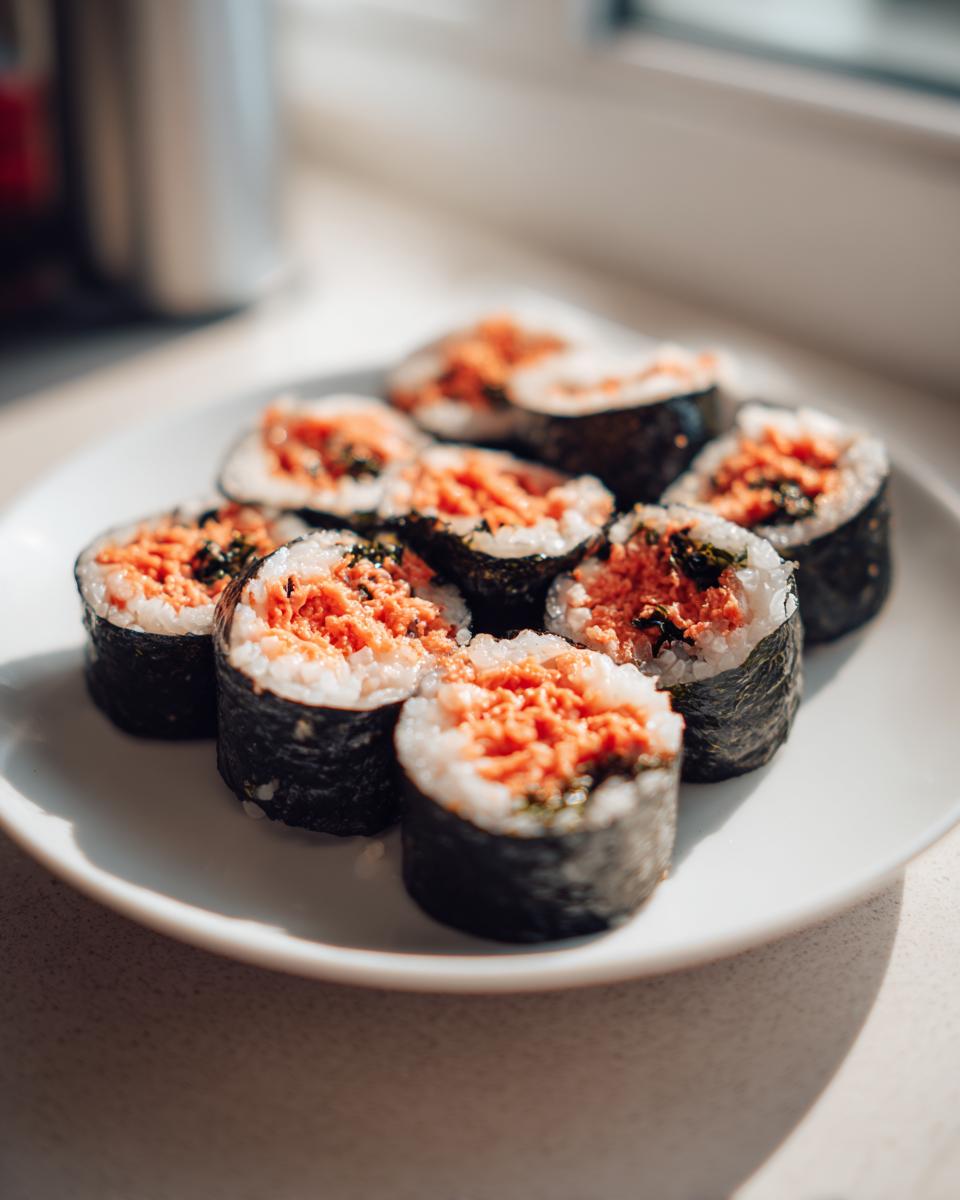
Also, don’t forget those extra texture options mentioned in the kimbap filling ideas! A few thin strips of crisp cucumber or some pickled radish tucked in there provide a fantastic crunch that complements the creamy tuna so well.
Storing Your Homemade Tuna Kimbap
So, you’ve rolled up a bounty of these amazing Korean seaweed rolls and you’ve got leftovers? That’s great! This spicy tuna kimbap holds together well, but here’s the thing: like most things wrapped in dried seaweed, it’s definitely best eaten the day you make it. That seaweed (nori or gim) starts to soften up quite a bit once it’s been exposed to the moisture from the rice and tuna filling.
If you are planning ahead—and I highly recommend this when making homemade korean lunch box food for your family—wrap the rolls tightly in plastic wrap *before* slicing. This seals in surface moisture and slows down the drying process. Store them like that in the refrigerator for up to 24 hours. Honestly, though, skip the fridge if you can, because the cold mutes the flavors and can make the rice taste a little hard.
I never recommend reheating kimbap, especially this spicy tuna version. The texture just doesn’t hold up well to heat. Just pull the plastic wrap off, slice it with that damp, sharp knife we talked about, and enjoy it cold or at room temperature. These rolls are just too quick to make for complicated storage anyway!
Serving Suggestions for Tuna Kimbap
When you pull out a fresh batch of that Spicy Tuna Kimbap, it almost feels like you should have a little street cart set up in your kitchen, doesn’t it? These rolls are fantastic all on their own—they are the perfect meal because they already contain rice, protein, and vegetable elements all wrapped up. That’s why I love them for quick lunches!
However, if you want to elevate them slightly, especially if you are serving them for guests or just want that wonderful flavor complexity you get from late-night korean street food rolls spots, you need a sidekick. My go-to pairing is always classic, slightly sour kimchi. The fermented tang cuts right through the richness of that Kewpie mayo and the spice from the sriracha beautifully. It’s a textural win and a flavor balance!
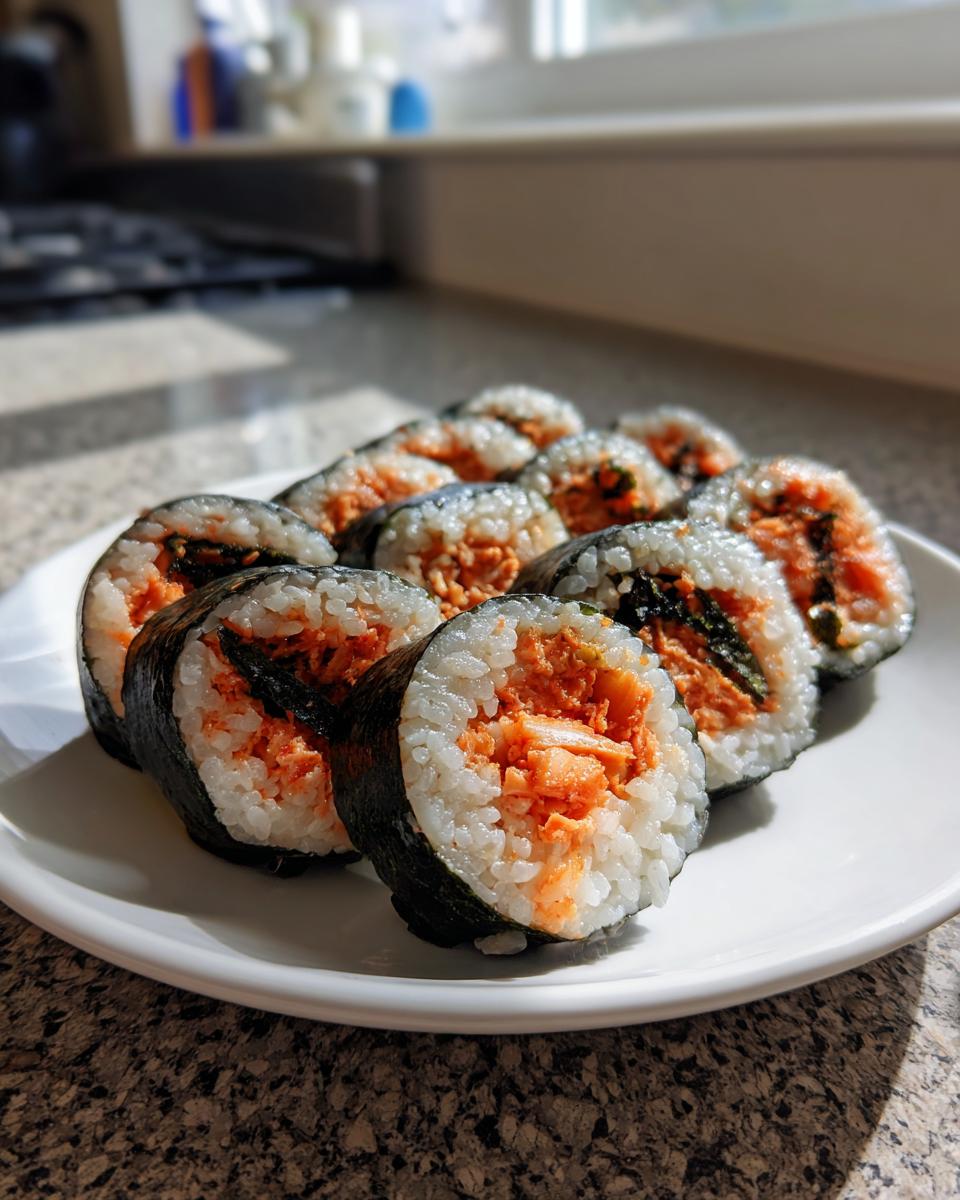
If kimchi isn’t your thing, you can never go wrong with a quick dipping sauce. This isn’t required for our tuna kimbap, but it sure is tasty. It takes literally two minutes to whisk together. Just mix equal parts low-sodium soy sauce and rice vinegar, and then add just a tiny splash of sesame oil and maybe a little sprinkle of toasted sesame seeds. That’s it! It gives you something cool and salty to dunk the ends into. Don’t overdo the dipping, though; we want the flavor of the spicy tuna filling to shine through!
Frequently Asked Questions About Tuna Kimbap
I always get so many questions when readers try kimbap for the first time, and that’s totally fine! It’s such a fun food to make, but knowing a few tricks makes the process so much smoother. Here are the common things folks ask me about making their own spicy tuna kimbap at home.
Can I use regular mayonnaise instead of Kewpie for this tuna kimbap recipe?
You absolutely can! I list Kewpie mayo because, well, it’s my favorite! It just has this wonderful, slight tanginess and a richer, silkier texture that really elevates the whole filling. If you don’t have it on hand, reach for your regular mayo. It will still be delicious, but just be aware that the final flavor won’t have that signature Japanese tang we get from Kewpie.
What is the difference between kimbap and sushi?
This is a big one! People mistake them all the time, but they are different creatures. The biggest difference is the rice seasoning. For sushi, you use rice vinegar, sugar, and salt—it’s seasoned to be a little acidic. For our tuna kimbap, we season the cooked rice with sesame oil and salt only. It gives it a nutty, savory flavor instead of a tangy one! Also, fillings are different; kimbap often includes cooked ingredients like seasoned spinach or pickled radish, while sushi usually focuses on raw fish.
Can I make the spicy tuna filling ahead of time?
Yes, you absolutely can, and I highly recommend it if you are planning for a busy morning! Mixing up that spicy tuna mayo component is a great way to get ahead. It stores beautifully in an airtight container in the fridge for a solid day or two. Having that ready cuts your assembly time down even further, making this an even quicker option for anyone needing quick asian roll recipes for meal prep. Just remember to keep it chilled until you are ready to assemble your rolls!
Nutritional Estimates for Tuna Kimbap
I always get asked about the nutrition when people make kimbap at home, especially since these are such a fantastic grab-and-go meal. Because we are using canned tuna here and relying on healthy fats from the sesame oil and mayo, these rolls are surprisingly satisfying!
Now, please remember that the figures I provide here are just estimates based on the exact ingredients listed in my recipe—your specific brand of mayonnaise or how much oil you drain from the tuna can change things slightly. This is just me being transparent like I always promise to be here at DeliceRecipe!
- Serving Size: 1 roll (approx 8 slices)
- Calories: 350
- Fat: 15g
- Saturated Fat: 3g
- Unsaturated Fat: 12g
- Trans Fat: 0g
- Carbohydrates: 40g
- Fiber: 1g
- Sugar: 3g
- Protein: 15g
- Cholesterol: 30mg
- Sodium: 450mg
See? Not bad at all for something that tastes this good and is so easy to make! It’s a delicious way to load up on those quick carbs for energy and decent protein to keep you full until dinner.
Share Your Homemade Korean Seaweed Rolls
Well, that’s it! We’ve gone from craving takeout to rolling gorgeous, spicy tuna kimbap right here in our kitchens. I truly hope that this recipe has given you confidence, especially with the rolling part—I know that’s the trickiest bit of any easy kimbap tutorial!
Now, the most rewarding part for me is seeing your creations! If you made this batch of chumchi gimbap, please come back and leave me a star rating right below this section. Your feedback helps me know what works best for all of our home cooks here at DeliceRecipe. I love knowing that something simple I figured out in my kitchen is helping you on your own cooking journey. You can learn more about our mission here if you’re curious!
Don’t forget to snap a picture of those beautiful rolls, especially if you experimented with those cucumber strips I mentioned, and tag us on social media! If you want to see how another wonderful cook organizes their spicy tuna version, check out this great inspiration from other home cooks right here. Happy rolling, and enjoy every single bite of your homemade Korean goodness!
PrintEasy Spicy Tuna Kimbap (Chamchi Gimbap)
Make this popular Korean seaweed roll at home. This recipe focuses on a quick, flavorful spicy tuna mayo filling, perfect for lunchboxes or simple meals.
- Prep Time: 15 min
- Cook Time: 0 min
- Total Time: 15 min
- Yield: 4 servings 1x
- Category: Main Dish
- Method: Rolling
- Cuisine: Korean
- Diet: Vegetarian
Ingredients
- 4 sheets roasted seaweed (nori or gim)
- 2 cups cooked short grain rice
- 1 teaspoon sesame oil (for rice)
- 1 teaspoon salt (for rice)
- 1 teaspoon sesame seeds (for rice)
- 1 can (5.3 oz) tuna in oil, drained
- 2 tablespoons Kewpie mayonnaise (or regular mayonnaise)
- 1 tablespoon sriracha sauce
- 2 tablespoons green onion, very finely chopped
- 4 perilla leaves, washed and dried (optional)
- Sesame oil for brushing
- Sesame seeds for sprinkling
Instructions
- Prepare the rice: Mix the cooked short grain rice with 1 teaspoon sesame oil, 1 teaspoon salt, and 1 teaspoon sesame seeds. Set aside to cool slightly.
- Make the spicy tuna filling: In a bowl, combine the drained tuna, Kewpie mayonnaise, sriracha sauce, and finely chopped green onion. Mix well until fully combined.
- Prepare the rolling station: Lay a bamboo rolling mat flat. Place one sheet of seaweed, shiny side down, on the mat.
- Spread the rice: Lightly wet your hands. Spread about half a cup of the seasoned rice evenly over the seaweed, leaving about a one-inch border clear at the top edge.
- Add fillings: If using, lay 1-2 perilla leaves over the rice. Spoon about one-quarter of the spicy tuna mixture in a line across the center of the rice.
- Roll the kimbap: Lift the edge of the mat closest to you and fold it over the filling, tucking the edge of the seaweed under the filling. Roll tightly, pressing gently to shape the roll. Moisten the top edge of the seaweed with a little water to seal the roll.
- Finish the roll: Brush the outside of the finished roll lightly with sesame oil and sprinkle with sesame seeds.
- Slice and serve: Repeat with the remaining ingredients. Use a sharp, damp knife to slice each roll into bite-sized pieces. Serve immediately or pack for your homemade Korean lunch box food.
Notes
- If you prefer a milder flavor, reduce the sriracha or omit it entirely for classic tuna mayo kimbap.
- For easier slicing, wrap the finished roll tightly in plastic wrap for 5 minutes before cutting.
- You can add thin strips of cucumber or pickled radish for extra crunch in your kimbap filling ideas.
Nutrition
- Serving Size: 1 roll (approx 8 slices)
- Calories: 350
- Sugar: 3
- Sodium: 450
- Fat: 15
- Saturated Fat: 3
- Unsaturated Fat: 12
- Trans Fat: 0
- Carbohydrates: 40
- Fiber: 1
- Protein: 15
- Cholesterol: 30