
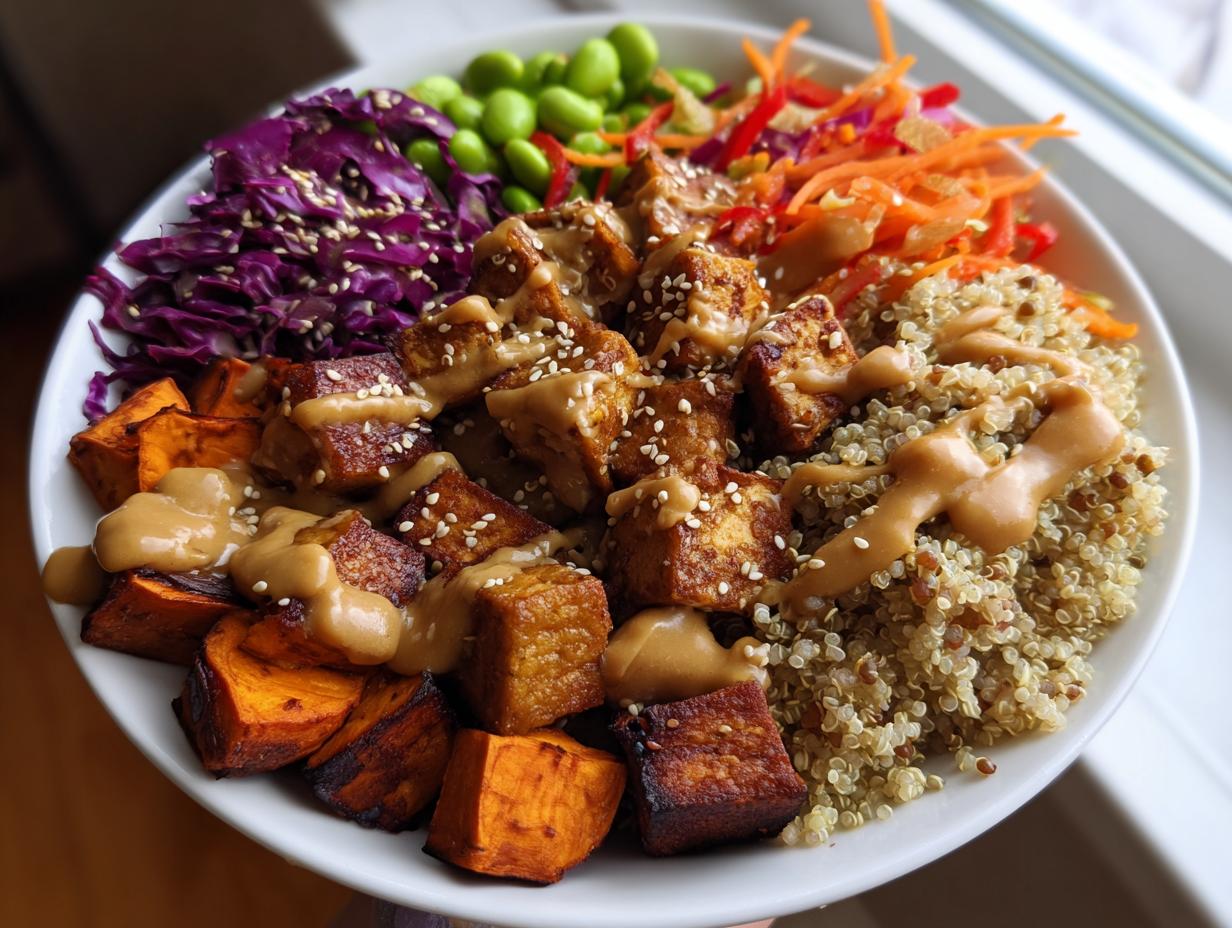
If you’re like me, sometimes you just crave a plate that looks as good as it tastes—something bursting with color that screams, “I am eating healthy today!” I get it! We all want those satisfying, vibrant meals without spending hours in the kitchen, especially on a weeknight. That’s exactly why I developed this High-Protein Thai Peanut Buddha Bowl. As someone who cut her teeth in the American home kitchen, I promise you this recipe is absolutely foolproof. It brings together textures and flavors in a way that makes eating healthy feel like a real treat. This is the kind of wholesome, easy-to-master assembly that will instantly become part of your regular rotation.
- Why This Thai Peanut Buddha Bowl is Your New Favorite Healthy Bowl Recipe
- Gathering Ingredients for Your High-Protein Buddha Bowl
- Step-by-Step Instructions to Assemble the Buddha Bowl
- Tips for Building the Perfect Buddha Bowl Every Time
- Dietary Adaptations for Your Buddha Bowl
- Storage and Make Ahead Tips for Your Buddha Bowl Components
- Frequently Asked Questions About Easy Grain Bowls
- Estimated Nutritional Breakdown for Your Buddha Bowl
- Share Your High-Protein Buddha Bowl Creations
Why This Thai Peanut Buddha Bowl is Your New Favorite Healthy Bowl Recipe
When I design a recipe, I want it to solve a problem, and honestly, boring lunch is the enemy! This bowl isn’t just pretty; it’s built to last you through the afternoon slump. It’s the ultimate answer if you’re looking for quick, healthy lunch recipes that taste indulgent.
High Protein Vegetarian Meals Power
We are hitting about 25 grams of protein here, thanks to that crispy tofu and the quinoa base. That is serious staying power! When you load up on quality protein, you don’t find yourself grazing an hour later. It keeps you feeling full and energized, which is exactly what these satisfying meals should do.
Perfect for Meal Prep Bowls
If you can roast it, it keeps well! This recipe shines when you make a big batch on Sunday. The roasted sweet potatoes, the cooked quinoa, and especially the sauce—they all store beautifully in separate containers. Then, when lunchtime rolls around, you just assemble. It makes those busy weekdays so much easier!
Flavorful Bowl Meals with Creamy Sauce
Let’s be real, even the healthiest veggies need a lift, and that’s where this Thai Peanut Dressing comes in. It’s creamy, it’s got that perfect balance of salty and sweet, and it ties everything together instantly. These flavorful bowl meals never taste like health food; they taste like a treat that happens to be packed with goodness.
Gathering Ingredients for Your High-Protein Buddha Bowl
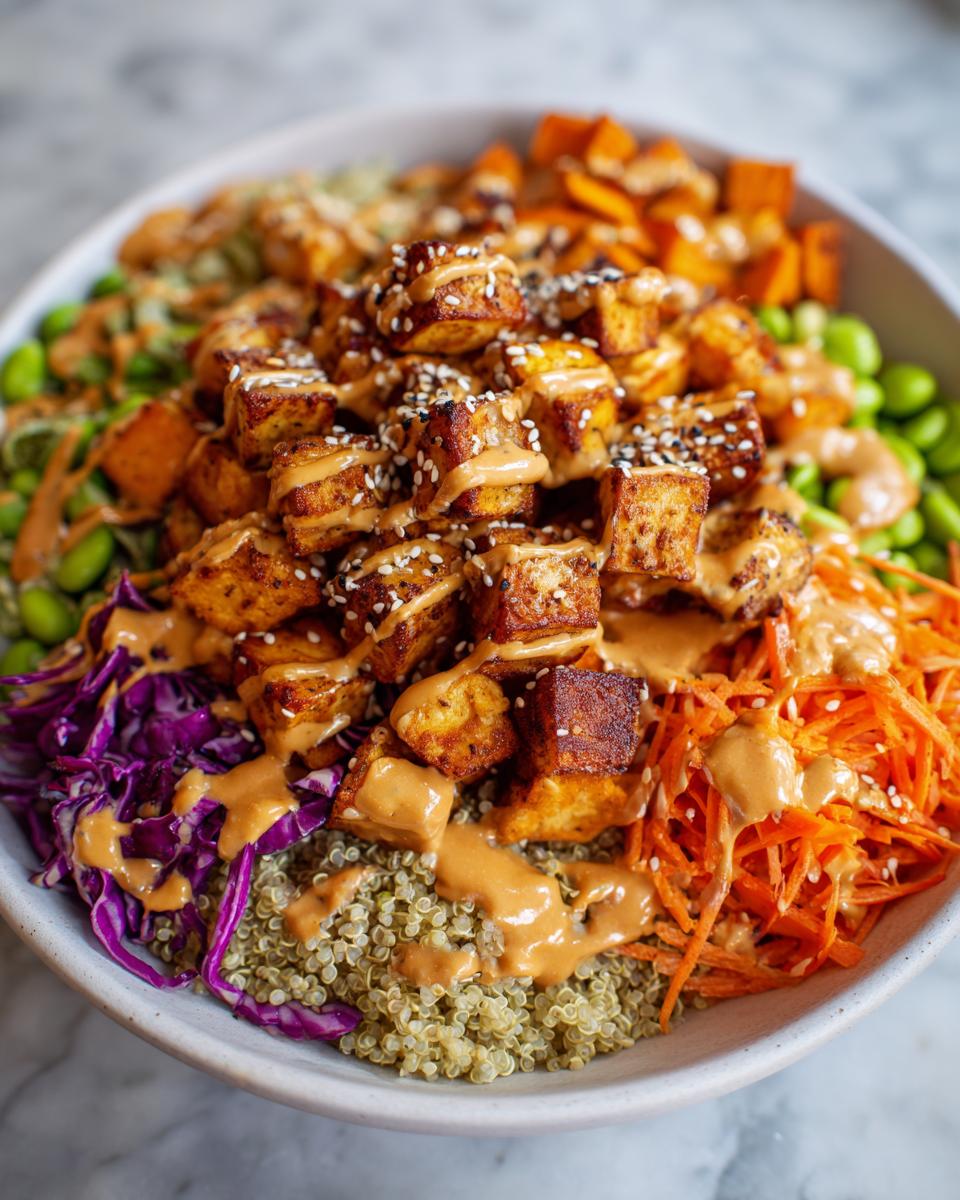
Okay, ingredient gathering is my favorite part—it’s where the magic starts! When you pile all these colorful bits together, it’s almost too pretty to eat, almost! But trust me, having everything ready to go means assembly moves lightning fast. Let’s make sure you have exactly what you need before you even turn on the oven. Precision here really helps us keep that total time under an hour, which is a win in my book!
For the Roasted Components and Base
These are the hearty parts of your bowl that give you all that fantastic texture and substance. Don’t skimp on pressing that tofu; it makes all the difference in getting it nice and crisp!
- 1 block (14 oz) extra-firm tofu, pressed and cubed (firm pressing is key!)
- 2 medium sweet potatoes, peeled and cubed
- 1 tablespoon olive oil (for tossing)
- 1 teaspoon salt
- 1/2 teaspoon black pepper
- 1 cup quinoa, rinsed really well—you don’t want that bitter taste!
- 2 cups water or vegetable broth (broth adds way more flavor, just saying!)
- 4 cups mixed greens (I usually grab a bag of spring mix)
- 1 cup shredded red cabbage
- 1 large carrot, shredded
- 1/2 cup shelled edamame (cooked, ready to go)
- 2 tablespoons sesame seeds, for a little crunch garnish
For the Creamy Thai Peanut Sauce
This is the star player, the thing that guarantees you’ll look forward to leftovers. We whisk everything straight in the bowl, so cleanup is minimal, which I absolutely love.
- 1/2 cup creamy peanut butter (the regular stuff works great, no need for fancy natural varieties here)
- 1/4 cup low-sodium soy sauce or tamari (remember, tamari is your friend if you need this to be gluten free!)
- 2 tablespoons rice vinegar
- 1 tablespoon maple syrup or honey (I usually lean towards maple syrup)
- 1 tablespoon grated fresh ginger (fresh is non-negotiable for sauce flavor!)
- 1 clove garlic, minced finely
- 1/4 cup warm water (or more, to thin)—add this slowly until it cascades nicely off your spoon.
Step-by-Step Instructions to Assemble the Buddha Bowl
Alright, time to get cooking! We’re breaking this down into manageable chunks—roasting, grain cooking, and sauce mixing. This way, everything finishes at the right time, and you aren’t running around like a maniac when dinner time hits. Trust me, when you follow these straightforward steps, you’ll have those beautiful bowls ready in about 50 minutes total. For tips on getting those roots perfectly caramelized, check out my secrets on baking sweet potatoes!
Roasting the Sweet Potatoes and Crispy Tofu
First things first: Preheat your oven to a nice hot 400°F (200°C). Get a baking sheet lined with parchment paper—this prevents sticking, which is always a bonus! Toss your sweet potatoes with half your olive oil, salt, and pepper, spreading them on one side of the sheet. Do the same thing to the cubed tofu and put it on the other half. Now, pop these in for about 20 to 25 minutes. Remember, things bake unevenly, so don’t forget to flip both the potatoes and the tofu halfway through. You’re looking for tender potatoes and tofu that looks golden brown and just a little crispy around the edges.
Cooking the Quinoa Base
While the veggies are roasting away, we tackle the grain. Always, always rinse your quinoa first—it gets rid of saponins that can make it taste a bit soapy. Combine that rinsed cup of quinoa with 2 cups of water or broth in a saucepan. Bring it to a nice rolling boil, then drop the heat way down low, cover it up tight, and let it simmer for exactly 15 minutes. Once the time is up, turn the heat completely off, but leave the lid on for another five minutes. Don’t lift that lid! When you finally lift it, fluff it up gently with a fork. Perfect easy grain bowls start with perfectly fluffy quinoa.
Mixing the Best Buddha Bowl Sauces
If you want your sauce game strong, you need to whisk with enthusiasm! In a small bowl, combine all the peanut sauce ingredients: peanut butter, tamari/soy sauce, vinegar, sweetener, ginger, and garlic. You need that warm water here, so add it slowly while you whisk like you mean it. Keep adding small splashes until that best buddha bowl sauce is perfectly creamy and drippy—not too thick that it plops out, but not watery either. A good drizzle consistency is what we aim for!
Assembling Your Flavorful Bowl Meals
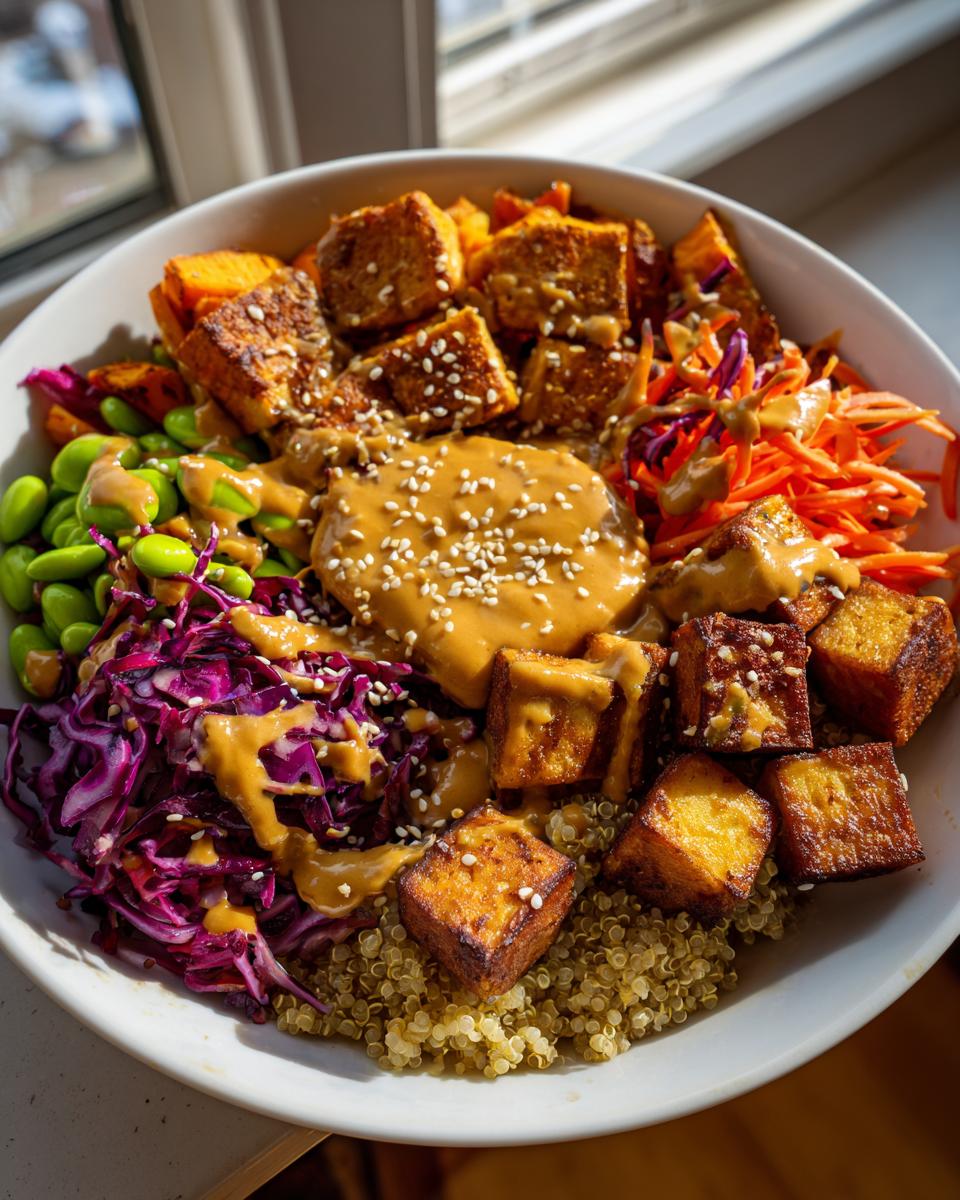
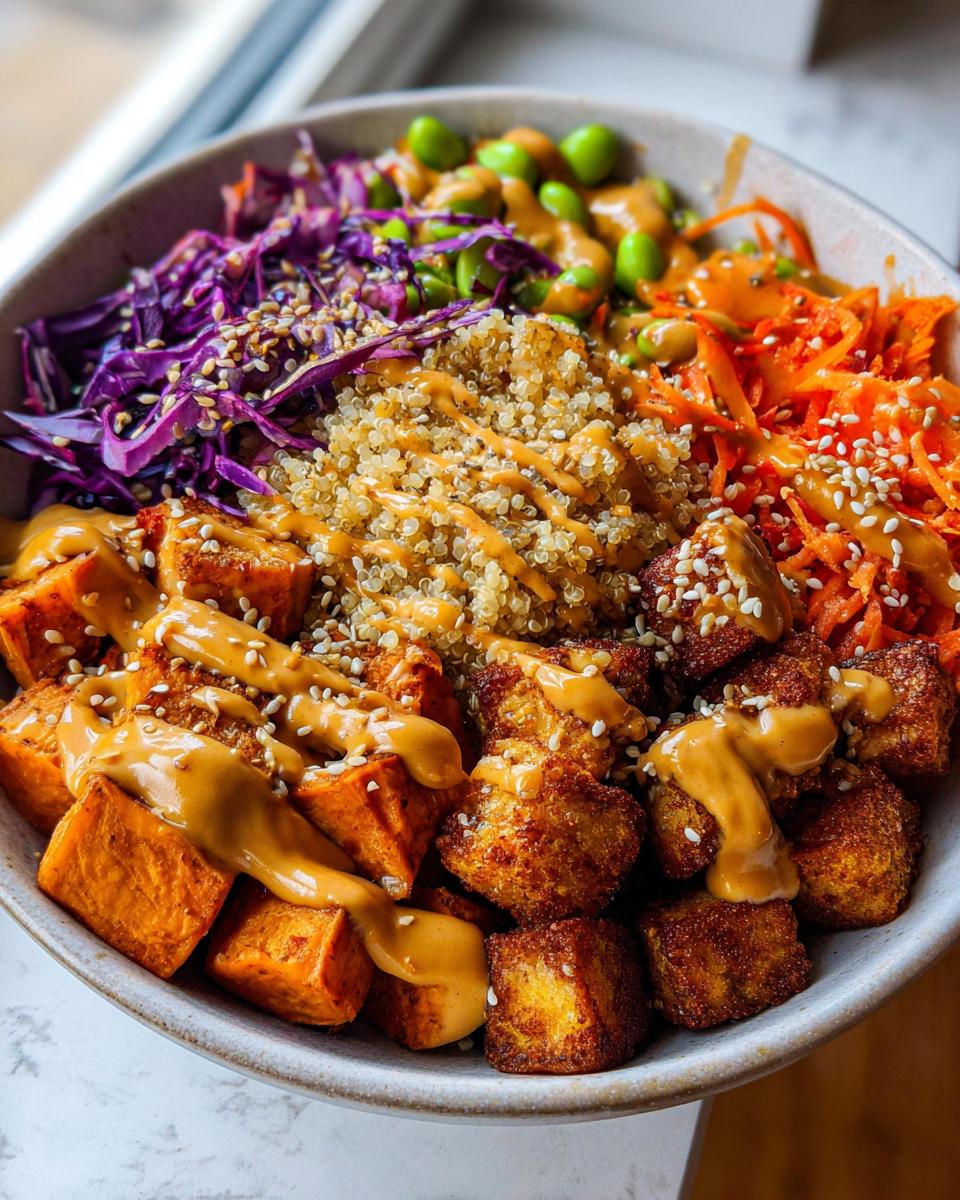
This is the fun part where you become an artist! Start by laying down a generous base of your cooked quinoa in your bowl. Next, layer in the soft stuff—that big handful of mixed greens goes down first. Then, arrange everything else neatly around the edges: your roasted sweet potatoes, your crispy tofu cubes, the shredded cabbage, the shredded carrots, and those little green pops of edamame. You want these colorful lunch ideas to look vibrant! Drizzle that glorious peanut sauce liberally over everything. Finally, sprinkle those sesame seeds on top for the perfect finish to your flavorful bowl meals.
Tips for Building the Perfect Buddha Bowl Every Time
Making a good bowl is easy, but making a *great* one? That takes just a couple of little insider secrets I’ve gathered over the years. It’s not just about throwing stuff in a dish; it’s about making sure every element sings and contrasts beautifully. When you get the texture right, suddenly your meal prep bowls feel like something you’d pay extra for at a fancy cafe. Following this guide ensures your next assembly isn’t sad or soggy!
Achieving Crispy Tofu for Your Buddha Bowl
If you want that satisfying chew on your tofu, you have to get the moisture out first. Yes, pressing the block is essential, but once it’s cubed, don’t toss it right into the sticky sauce! Toss it lightly in cornstarch—just a teaspoon or two—before you hit it with the oil and spice. Then, when you roast it on parchment paper, you get an almost fried exterior, which makes for great high protein vegetarian meals. If you skip the cornstarch, just make sure your cubes are super dry before they hit that hot oven. No one wants soggy tofu eating their bowl!
Quinoa Bowl Combinations and Texture Contrast
This is where Eleanor Vance’s expertise really kicks in! You need contrast. We have the soft, fluffy quinoa and the creamy roasted sweet potato, right? So, you absolutely need crunch to balance that out. Make sure your shredded cabbage and raw carrots are cut thinly so they provide a crisp bite instead of tasting clunky. You can also add toasted nuts or seeds, like slivered almonds, for an extra snap. It’s that dance between soft, creamy, and crunchy that turns simple how to build a buddha bowl into something spectacular. For some great ideas on ratios in your healthy portions, you should definitely check out this tip on the golden ratio for a delicious sweet potato buddha bowl!
Dietary Adaptations for Your Buddha Bowl
You know, one of the greatest things about this style of meal is how completely adaptable it is. My goal here at DeliceRecipe is to make sure everyone can enjoy a fantastic dinner, no matter what rules you’re following in the kitchen. This formula is so solid, we just need to swap a couple of things around to make sure your version of the buddha bowl is perfect for you. Whether you’re cooking for someone who needs specific dietary considerations or just ran out of tofu, we have you covered!
Making This a Gluten Free Nourishing Meal
If you’re keeping things completely gluten-free, you already made the most important swap in the sauce, right? I mentioned using tamari instead of soy sauce, and if you haven’t done that yet, make the switch now! Also, double-check your broth—if you use vegetable broth to cook your quinoa, make sure that label says certified gluten-free, just to be safe. Quinoa itself is a fantastic grain base for gluten free nourishing meals; it’s naturally GF, so that foundation is solid. It’s these little checks when shopping that make all the difference!
Protein Swaps for Vegan Power Bowls
Tofu is my go-to for texture, but let’s say your family isn’t huge on soy, or you just want to switch things up for variety. You can keep this recipe firmly in the realm of vegan power bowls by swapping out the tofu easily. Roasted chickpeas are my absolute favorite alternative—toss them in a little cumin and paprika before roasting! You could also use lentils or even firm baked tempeh if you prefer something heartier. If you want non-vegan protein ideas to add to these bowls, I have a great recipe for high protein chicken that you might enjoy applying to our grain base instead. Just remember, whatever you pick, you need about a cup cooked to get that protein count up!
For more amazing plant-based inspiration that stays true to the bowl concept, you should definitely browse through these other excellent vegan buddha bowl recipes I’ve found!
Storage and Make Ahead Tips for Your Buddha Bowl Components
I know, I know—the thought of cooking every single night is exhausting. That’s why I’m a huge champion of assembly meals, and this recipe is practically designed for your Sunday batch cooking session. The secret to amazing meal prep bowls that don’t taste sad by Wednesday is storage. You absolutely must keep the components separate until you are ready to eat. Think of it like LEGOs; you build the final structure right before you play!
Here is the breakdown I use when getting my Tupperware ready. Grains first! Cook a big batch of quinoa and let it cool completely before putting it in an airtight container. Then, your roasted sweet potatoes and tofu should go into their own container. Since they are roasted, they hold up really well! Finally, the sauce—this needs its own little jar. If you keep that creamy peanut sauce separate and sealed tight, it stays fresh and perfect for up to a week. When you’re ready to eat, just scoop out your portions, warm up the grain/veggies if you like, and drizzle that sauce right on top. For great ideas on making other small meals ahead of time, check out my guide on easy component prep!
Frequently Asked Questions About Easy Grain Bowls
When I first started making these kinds of meals, I had a million little questions, and I bet you do too! It’s smart to know how to adjust things to fit your schedule or whatever you have lingering in the crisper drawer—that’s what makes home cooking so much fun. We want these easy grain bowls to fit seamlessly into your life, not the other way around. I’ve pulled together some of the most common things people ask me about balancing this recipe!
Can I make this a quick dinner bowls recipe if I skip roasting?
Oh yes, absolutely! Roasting is magical for flavor, but sometimes you need a fantastic quick dinner bowls situation, usually because it’s 6 PM and you are starving. If you skip roasting, you need pre-cooked items. Instead of roasting the tofu and potatoes, use canned chickpeas—just rinse, drain, and toss them with spices directly into the bowl. You can also skip cooking quinoa from scratch and use a quick-cooking variety or even pre-cooked rice pouches you microwave in 90 seconds. It cuts the time down considerably!
What other vegetables work well in these vibrant salad bowls?
The beauty of this whole concept is that you can use whatever is in season or what needs to be eaten up! If you want to swap out the carrots and slaw for something else, I love adding quick-steamed broccoli florets—they hold their texture nicely. Roasted cauliflower, thinly sliced radishes for extra spice, or strips of bell pepper are all amazing additions. Think about adding creamy avocado right before serving for healthy fats. These vibrant salad bowls are really flexible, so just chop up whatever looks good!
How long does the Thai Peanut Sauce last in the refrigerator?
That creamy Thai Peanut Sauce is truly a liquid gold I make extra of every time. Because it’s thick and packed with peanut butter, it preserves really well. When stored in a completely sealed, airtight container in the back of your fridge, it stays perfectly fresh and delicious for up to one full week. That means you only have to make the sauce once for an entire week’s worth of lunches! If you feel like checking out some incredible salad-style bowl options that still use great dressings, take a look at this fish taco style bowl recipe for inspiration.
If you’re looking for more ways to turn simple ingredients into fast weeknight meals, you should bookmark my guide to easy weeknight dinners!
Estimated Nutritional Breakdown for Your Buddha Bowl
Now, I always tell my readers that cooking at home is the only way to truly know what’s going into your body, but sometimes, especially if you’re tracking macros or just curious, you want the ballpark figures. So, as a fellow home cook, I’ve run the numbers based on the specific ingredients listed for this High-Protein Thai Peanut Buddha Bowl recipe. Please remember, these are estimates! If you use a different brand of peanut butter or skip the edamame, things will shift a little.
This breakdown is based on four equal servings:
- Calories: Around 580 per bowl
- Protein: A whopping 25 grams—that’s why I called this high-protein!
- Fat: Approximately 30 grams (mostly the healthy kind from peanuts)
- Carbohydrates: About 60 grams
- Fiber: A great boost at 12 grams
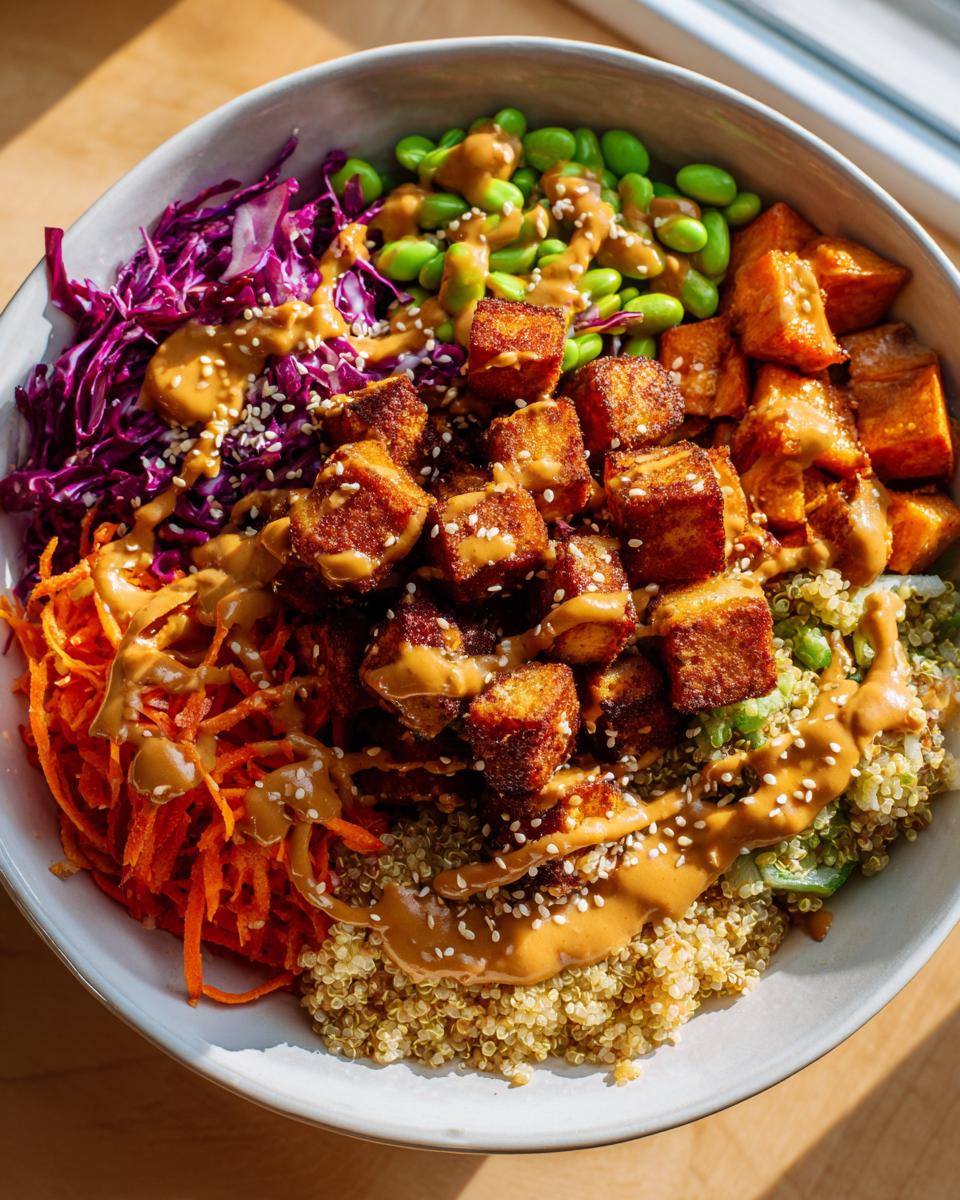
The sodium count is a little higher here, around 650mg, mainly due to the soy sauce, so if you’re watching that, definitely use low-sodium tamari or go easy on the peanut dressing when assembling your nourishing meals. This breakdown confirms that these bowls deliver exactly what they promise: a balanced, filling, and genuinely satisfying meal choice!
Share Your High-Protein Buddha Bowl Creations
Honestly, cooking for my family and friends is what brings me the most joy, and sharing recipes with you all here at DeliceRecipe builds that same wonderful community spirit! Now that you’ve got the know-how for roasting tofu to perfection and whipping up that incredible Thai Peanut Sauce, I truly hope you give this recipe a try.
When you do make this High-Protein Buddha Bowl, please come back and let me know how it went! Did you use chicken instead of tofu? Did you add a sprinkle of red pepper flakes to the sauce for heat? Every variation you try helps inspire the next home cook who comes along looking for a great meal. Don’t be shy about sharing your thoughts in the comments below—that’s how we learn together.
If you loved this recipe, please take a moment to give it a star rating! It helps other folks find these simple, flavorful recipes. And if you ever have questions or want to chat about ingredient swaps or techniques, you can always reach out directly through my contact page. Happy cooking, friends, and I can’t wait to see what beautiful bowls you create!
PrintHigh-Protein Thai Peanut Buddha Bowl with Roasted Sweet Potatoes and Crispy Tofu
Assemble this satisfying, high-protein Buddha bowl featuring roasted sweet potatoes, crispy tofu, fresh vegetables, and a creamy Thai peanut sauce. This recipe is excellent for weeknight dinners or healthy meal preparation.
- Prep Time: 20 min
- Cook Time: 30 min
- Total Time: 50 min
- Yield: 4 servings 1x
- Category: Dinner
- Method: Baking
- Cuisine: Asian-Inspired
- Diet: Vegan
Ingredients
- 1 block (14 oz) extra-firm tofu, pressed and cubed
- 2 medium sweet potatoes, peeled and cubed
- 1 tablespoon olive oil
- 1 teaspoon salt
- 1/2 teaspoon black pepper
- 1 cup quinoa, rinsed
- 2 cups water or vegetable broth
- 4 cups mixed greens (spinach, kale, or spring mix)
- 1 cup shredded red cabbage
- 1 large carrot, shredded
- 1/2 cup shelled edamame (cooked)
- 2 tablespoons sesame seeds, for garnish
- For the Thai Peanut Sauce:
- 1/2 cup creamy peanut butter
- 1/4 cup low-sodium soy sauce or tamari (for gluten free)
- 2 tablespoons rice vinegar
- 1 tablespoon maple syrup or honey
- 1 tablespoon grated fresh ginger
- 1 clove garlic, minced
- 1/4 cup warm water (or more, to thin)
Instructions
- Preheat your oven to 400°F (200°C). Line a baking sheet with parchment paper.
- Toss the cubed sweet potatoes with half the olive oil, salt, and pepper. Spread them on one half of the prepared baking sheet.
- Toss the cubed tofu with the remaining olive oil, salt, and pepper. Spread them on the other half of the baking sheet.
- Roast the sweet potatoes and tofu for 20-25 minutes, flipping halfway through, until the potatoes are tender and the tofu is golden brown and slightly crispy.
- While the vegetables roast, cook the quinoa. Combine the rinsed quinoa and water or broth in a saucepan. Bring to a boil, then reduce heat to low, cover, and simmer for 15 minutes, or until all liquid is absorbed. Fluff with a fork.
- Prepare the Thai Peanut Sauce. In a small bowl, whisk together the peanut butter, soy sauce, rice vinegar, maple syrup, ginger, and garlic. Gradually whisk in the warm water until the sauce reaches a smooth, pourable consistency.
- Assemble the Buddha bowls. Divide the cooked quinoa among four bowls. Arrange the mixed greens, roasted sweet potatoes, crispy tofu, shredded cabbage, carrots, and edamame neatly over the quinoa base.
- Drizzle each bowl generously with the Thai Peanut Sauce and sprinkle with sesame seeds before serving.
Notes
- For a quick weeknight meal, you can use pre-cooked quinoa or quick-cooking grains.
- If you prefer a different protein, substitute the tofu with 1 cup of cooked black beans or grilled chicken breast.
- To make this recipe gluten free, ensure you use tamari instead of soy sauce for the peanut dressing.
Nutrition
- Serving Size: 1 bowl
- Calories: 580
- Sugar: 14
- Sodium: 650
- Fat: 30
- Saturated Fat: 5
- Unsaturated Fat: 25
- Trans Fat: 0
- Carbohydrates: 60
- Fiber: 12
- Protein: 25
- Cholesterol: 0