
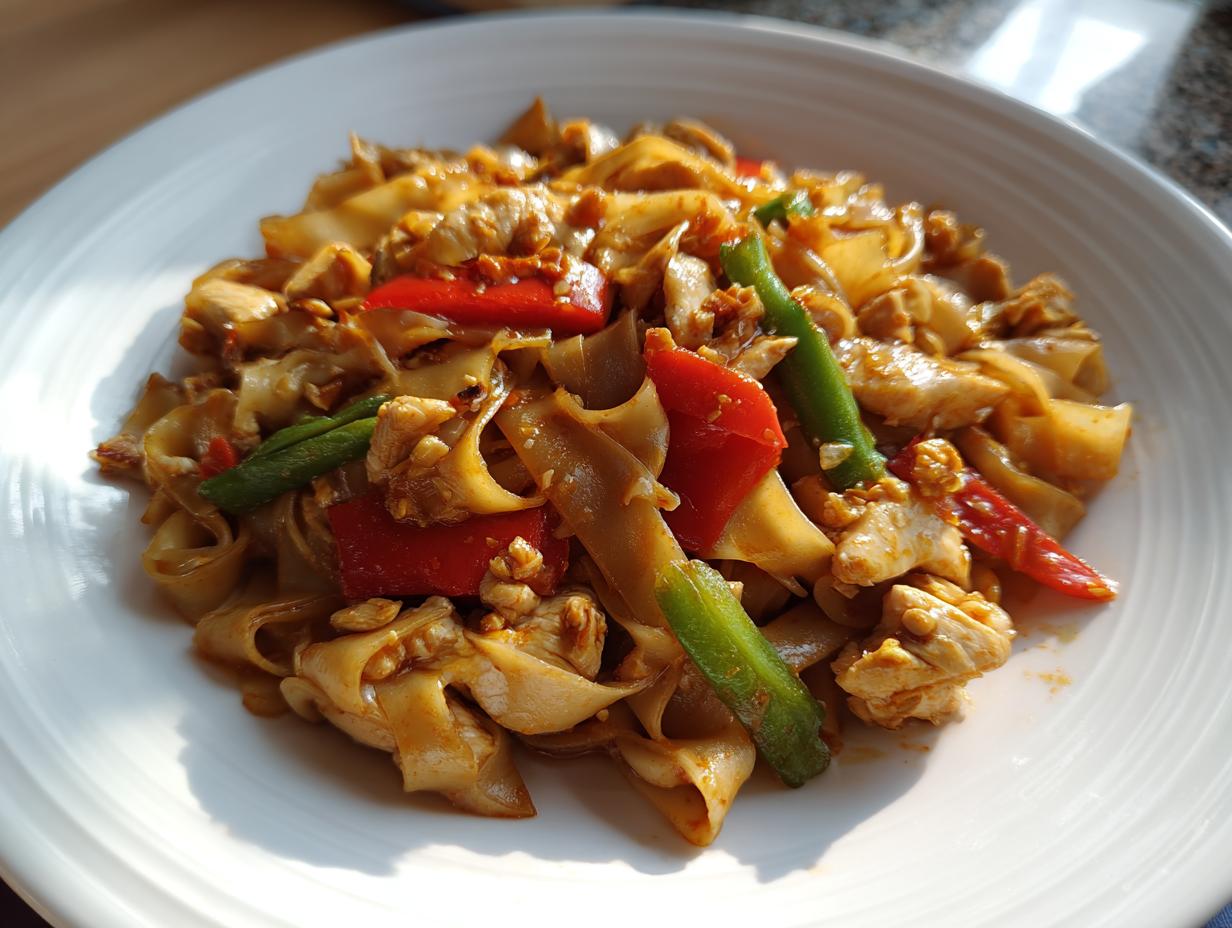
Oh, you know that feeling, right? That deep, urgent craving for takeout Thai food, but you’d much rather stay cozy in your own kitchen? I get it! Sometimes you just need that punch of heat and savory goodness that perfectly cooked noodles deliver. That’s exactly why I perfected my **thai drunken noodles recipe chicken**.
Forget overly complicated techniques; this Pad Kee Mao is intensely flavorful—spicy, savory, and delightfully aromatic—and the best part? It comes together faster than the delivery guy can find your house! I’m Eleanor, and my mission here at DeliceRecipe is to show you that authentic Asian flavors, like these amazing wok-tossed noodles, are totally achievable for the everyday home cook. Trust me, once you try this, you’ll be tossing noodles like a pro.
We’re going to bridge that gap between craving your favorite **Quick Thai Takeout Recipe Chicken** and actually having it steaming hot on your table in under 30 minutes by following these simple steps.
- Why This Thai Drunken Noodles Recipe Chicken Is Your New Favorite Weeknight Meal
- Essential Pad Kee Mao Ingredients Guide for Authentic Flavor
- How To Make Drunken Noodles: Step-by-Step Pad Kee Mao Chicken Tutorial
- Tips for Achieving Smoky Flavor (Wok Hei) in Your Spicy Thai Basil Noodles At Home
- Customizing Heat Levels in Your Thai Drunken Noodles Recipe Chicken
- Storage and Reheating Instructions for Leftover Thai Drunken Noodles Recipe Chicken
- Serving Suggestions for Your Quick Thai Takeout Recipe Chicken
- Frequently Asked Questions About Making Thai Drunken Noodles Recipe Chicken
- Estimated Nutritional Snapshot for This Spicy Asian Noodle Dinner Idea
Why This Thai Drunken Noodles Recipe Chicken Is Your New Favorite Weeknight Meal
I know my kitchen, and I know yours. When dinner needs to happen fast but still taste like you ordered it from your favorite place, this is the recipe you reach for. This isn’t just another stir-fry; it’s an Easy Drunken Noodles Recipe that delivers huge flavor without the effort.
Here’s why this version of Pad Kee Mao with chicken is going to earn permanent rotation status:
- It’s incredibly fast—we are talking 25 minutes total time from start to finish.
- The flavor balance is spot on: spicy from the chilies, deep and savory from the sauces, and herbaceous from the basil.
- My instructions are clear, so even if you’ve never used a wok before, you’ll feel like a seasoned pro. Check out more easy weeknight dinners here!
Quick Prep and Cook Times
Seriously, the numbers speak for themselves. You only need about 15 minutes of prep—mostly slicing veggies and mixing the sauce—and then the actual cooking is a lightning-fast 10 minutes. That’s the beauty of a proper **Wok Stir Fry Chicken Noodles** technique; everything cooks in a flash over high heat!
Essential Pad Kee Mao Ingredients Guide for Authentic Flavor
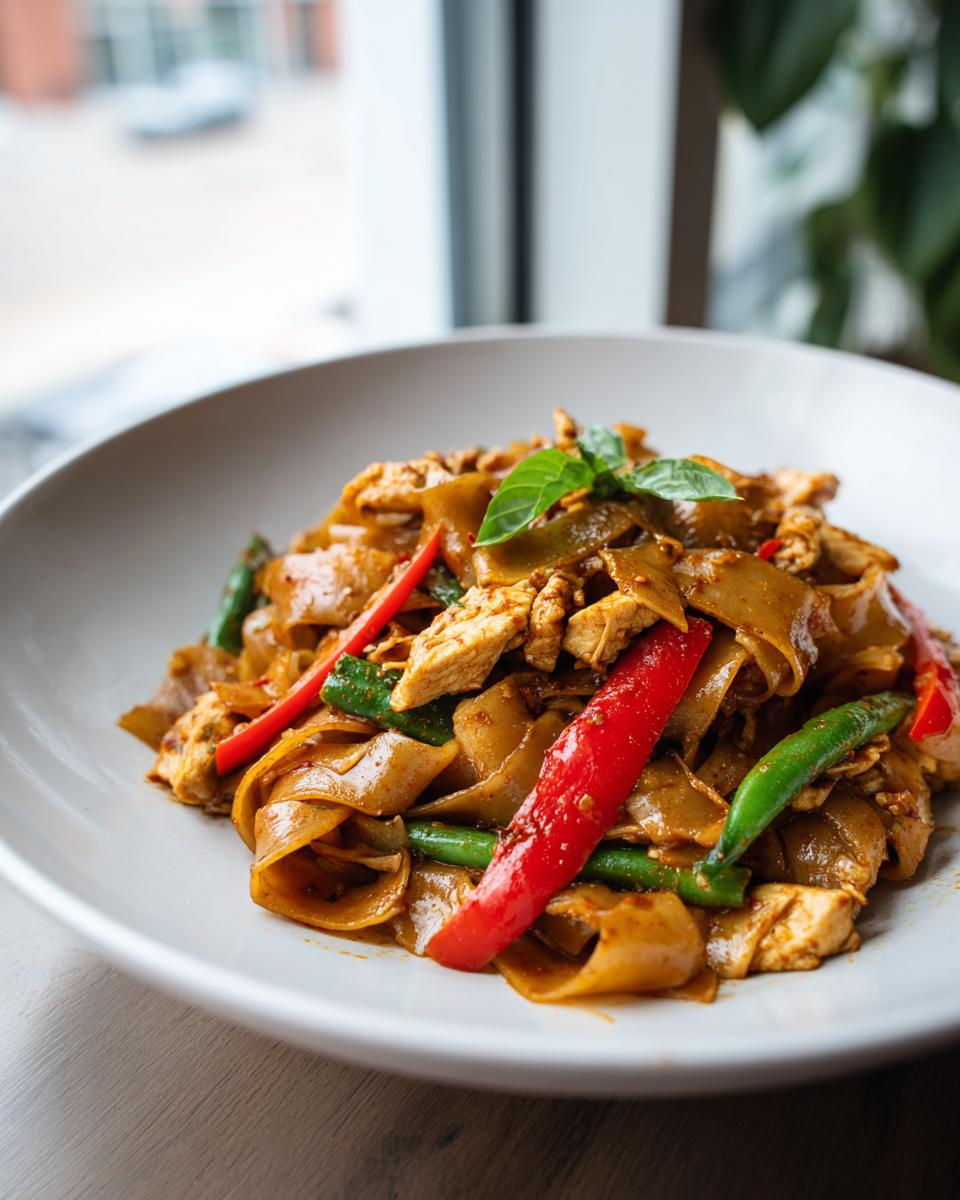
Okay, friends, let’s talk ingredients for a minute. This is where 90% of people mess up when trying to capture that authentic street food magic. Since this is an Authentic Thai Noodle Dish, we can’t just throw random stuff in the wok. My goal is to make sure you have everything ready to go so when that heat hits the pan, you aren’t scrambling for the right sauce bottle. Believe me, having everything measured out ahead of time—what we call *mise en place*—is the key to mastering high-heat cooking!
If you’re looking for other amazing chicken noodle dishes, you absolutely have to check out my Chicken Pad Thai recipe—it follows a similar prep style!
Noodles and Protein Selection for Your Thai Drunken Noodles Recipe Chicken
First up: the noodles. You need wide rice noodles, about a quarter of an inch wide. You can usually find these fresh, which is my favorite way to go because they soak less water and have a great chew. If you use dried, though, don’t panic! Just soak them according to the package until they are pliable but definitely still firm—we don’t want mush! For the chicken, I prefer thighs because they stay juicier under high heat, but breast works fine too. The trick here is slicing it *thinly* across the grain. This lets it cook super fast and absorb all that delicious sauce flavor.
Creating the **Best Pad Kee Mao Sauce Recipe**
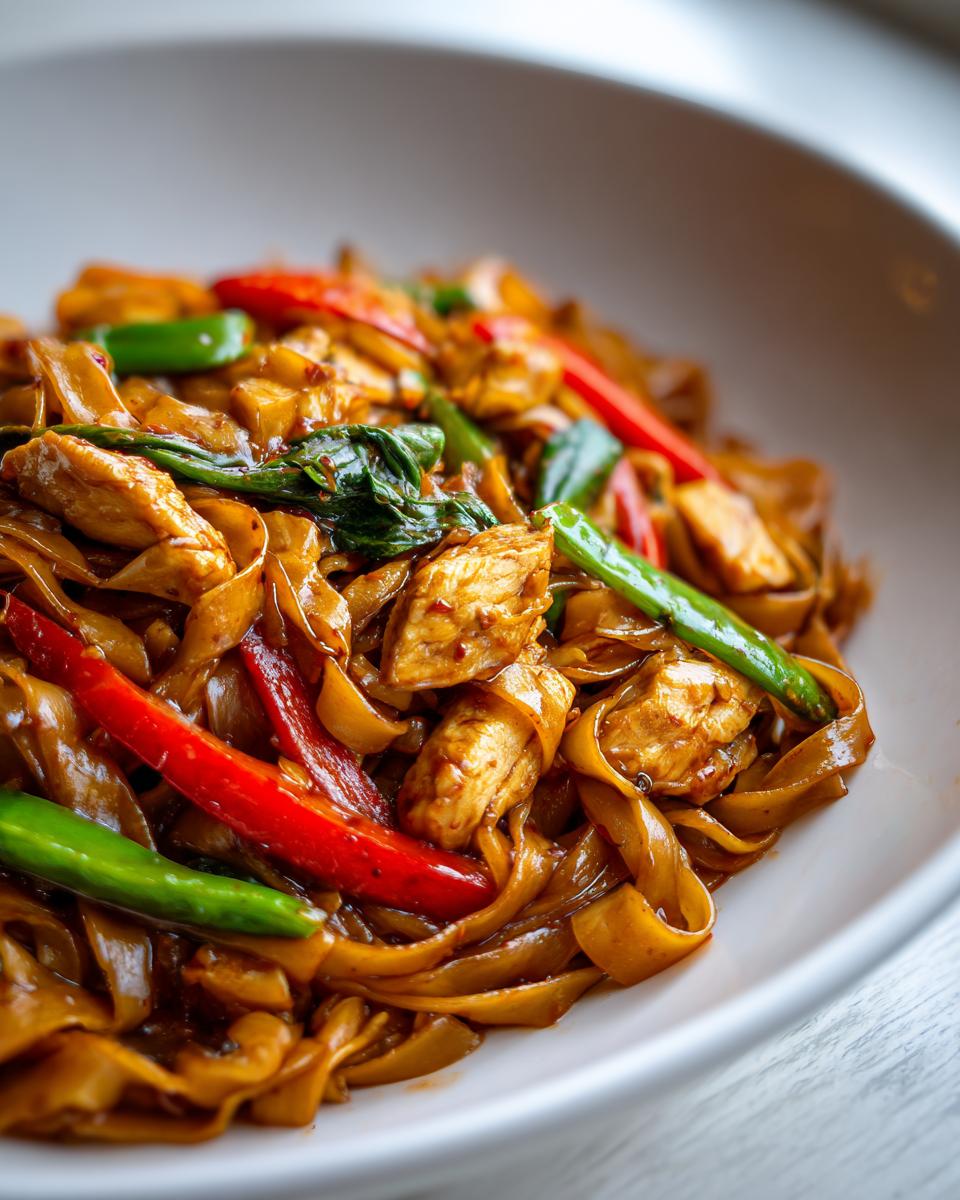
The heart of Pad Kee Mao is the sauce, and it needs that true balance of savory, sweet, and salty to make it a truly Savory and Spicy Noodle Dish. You’ll need some oyster sauce, a splash of light soy sauce or fish sauce for that salty kick, just a touch of sugar to round things out, and pepper. But listen closely: the secret weapon here is the dark sweet soy sauce. It’s thicker and has a deep molasses flavor that regular soy sauce just can’t replicate. It gives your finished noodles that beautiful, dark, glossy coating. If you don’t have it, mix regular soy and a teaspoon of brown sugar, but try to grab the dark sweet soy if you can!
How To Make Drunken Noodles: Step-by-Step Pad Kee Mao Chicken Tutorial
Alright, this is where the magic happens! Making Pad Kee Mao is really all about speed and maintaining high heat. If you try to cook this slowly, everything steams, and we don’t want soggy noodles, right? We want that slightly charred, smoky depth that only a screaming hot wok delivers. Before you even turn the burner on for this Pad Kee Mao Chicken Tutorial, have your sauce mixed, your veggies chopped, and your noodles soaking. Organization is your best friend here.
If you’re looking for another delicious, quick skillet meal while you wait for the flavor to build, you absolutely have to check out my garlic butter chicken bites recipe! It follows a similar high-heat technique.
Noodle Preparation: Achieving the Right Texture
Your noodles have to be ready to go. If you’re using dried wide rice noodles, the package will tell you how to soak them, but the key is to pull them out when they are *al dente*—meaning they are pliable but still have some firmness left. Drain those puppies right away, and this is important: toss them gently with just one teaspoon of oil. That little bit of oil is insurance against them turning into one giant sticky noodle clump when they hit the heat later on. If you’re lucky enough to find fresh ones, just take a moment to gently separate them by hand so they cook evenly.
The High-Heat Wok Technique for Thai Drunken Noodles Recipe Chicken
Now, grab your wok—or your largest, heaviest skillet—and blast that heat up until it’s practically shimmering. Add your oil and let it get hot enough to almost smoke (this is key!). First, toss in your seasoned chicken pieces and stir-fry quickly until they look cooked through, about 2-3 minutes. Don’t crowd the pan! You need that sear. Once the chicken is done, pull it out of the wok and set it aside; we’ll bring it back in later.
Next, another tablespoon of oil, then the minced garlic and those fiery chilies. Cook them fast—just about 15 seconds until you can smell that amazing aroma; be careful they don’t burn! Immediately throw in your sliced onion, bell pepper, baby corn, and green beans. Stir-fry those hearty vegetables for 2 minutes until they just start to soften slightly. Back goes the cooked chicken! Pour in that sauce mixture you whisked together earlier, along with your quarter cup of chicken broth, and toss everything quickly to coat.
Finally, add your prepared rice noodles to the wok. Keep tossing continuously using tongs for 1-2 minutes. You want to make sure those noodles absorb all that sauce and get thoroughly heated through. This high-heat, quick toss is how we build those amazing smoky flavors right here in your home kitchen!
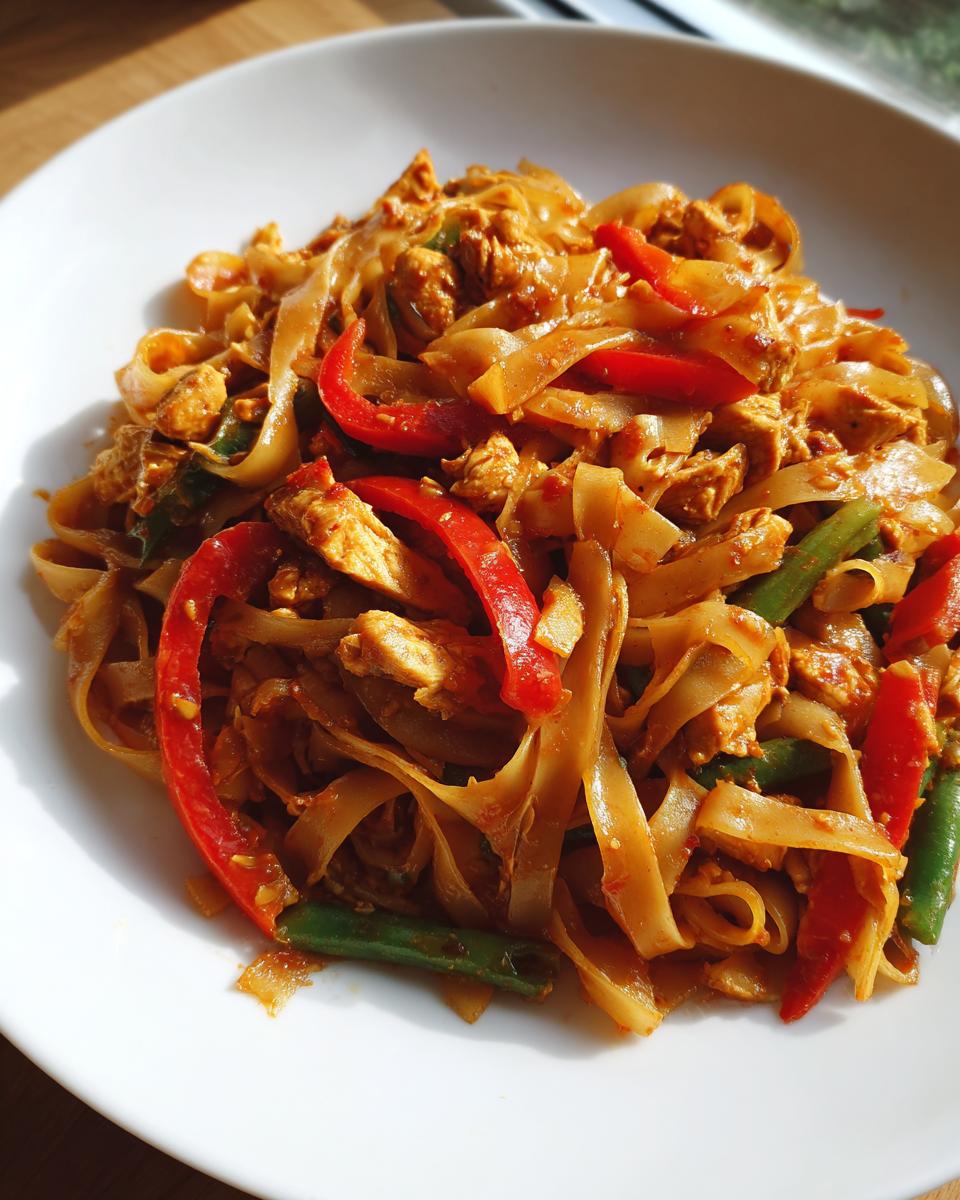
Tips for Achieving Smoky Flavor (Wok Hei) in Your Spicy Thai Basil Noodles At Home
If you visit a great Thai restaurant, the Pad Kee Mao they slide in front of you has this incredible, almost grilled, smoky perfume. We call that ‘wok hei’—the breath of the wok—and it’s the absolute hallmark of a perfectly executed stir-fry. Getting that intense flavor at home sounds tough, but honestly, it just comes down to heat management and using the right tools.
Don’t worry if you don’t have a giant commercial burner at home; we can fake it beautifully! My grandmother always said the pan needs to be angry before you feed it food. If you’re making a big batch, please, please cook in two smaller batches. Trying to cram everything into one small pan drops the temperature immediately, and instead of searing, your chicken and veggies will just stew in their own liquid. We want sizzle, not simmer!
Here are the non-negotiables to capture that smoky magic:
- Use the Heaviest Pan You Own: A cast-iron skillet or a proper carbon steel wok holds heat much better than thin aluminum. It’s essential for maintaining that blazing temperature.
- Get It Smoking Hot First: Put the empty wok on the burner. Turn the heat to high. Let it sit there, empty, until you see faint wisps of smoke coming off the metal—that’s when it’s ready for the oil. This step, as noted in my recipe tips, is crucial for generating that real smoky flavor.
- Oil Reacts to Heat: Wait just a hair after adding the oil—it should look thin and start to shimmer immediately. If you add ingredients to cold oil, they’ll soak it up instead of frying quickly.
When you toss those basil leaves in right at the very end, just before taking the whole dish off the burner, you’ll get that signature herbaceous hit mingling with the heat. It’s truly spectacular! If you need another great high-heat noodle inspiration, take a look at my chicken chow mein recipe for more stir-fry tips.
Customizing Heat Levels in Your Thai Drunken Noodles Recipe Chicken
Okay, let’s talk about the fun part: the fire! This is Pad Kee Mao, after all—the Drunken Noodle dish infamous for packing a punch. In the recipe, I call for 2 to 4 sliced Thai chilies. If you are new to serious spice, start with just two chilies, or even slice just one in half and leave the seeds out entirely. You can always add heat later, but you can’t take it out once it’s married to that sauce, right?
Thai chilies are their own wonderful breed; they have a fruity note along with the burn. If you absolutely cannot find them at your market, don’t stress out! You can substitute serrano peppers, which give a similar sharp heat, though they lack some of that fruitiness. Another common swap is using standard dried red chili flakes, but you’ll need to use more of them, and they tend to distribute the heat a little more unevenly.
My personal rule of thumb? If you prefer a lower heat level, finely mince just one chili and sauté it with the garlic for those initial 15 seconds. This infuses the oil, which spreads the heat throughout the dish without leaving raw chunks floating around. But frankly, Pad Kee Mao shines when it’s spicy! If you really love the burn and want to pump up the volume even more, add a dash of Sriracha right into your sauce mixture. For more ideas on turning up the excitement in your dinner, check out my spicy honey lime chicken recipe—it uses a different kind of heat but is just as addictive!
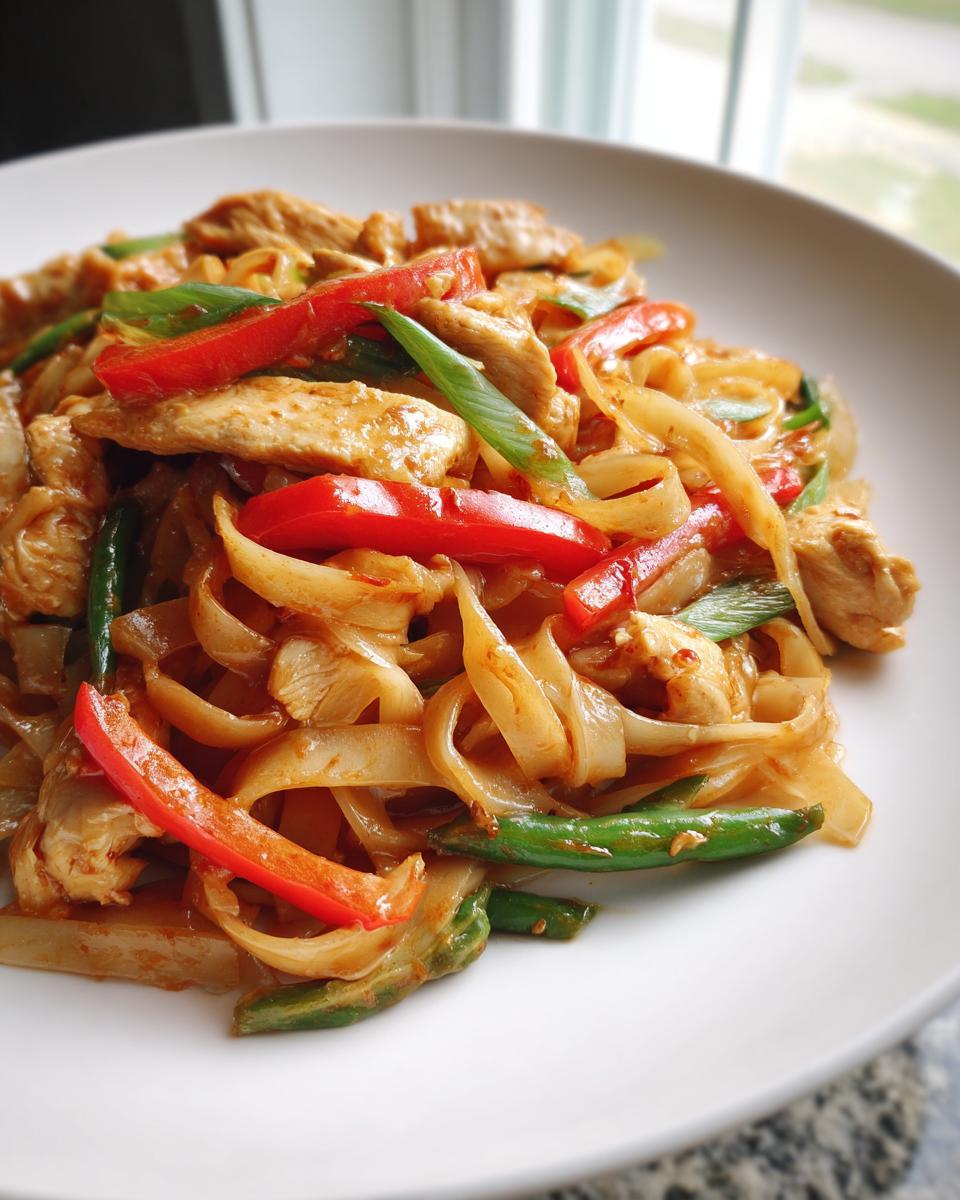
Storage and Reheating Instructions for Leftover Thai Drunken Noodles Recipe Chicken
Believe it or not, these spicy noodles are still good the next day, though the texture changes a bit once they cool down. Once everything is completely cooled off—and please let them cool before sealing them up!—tuck your leftovers into an airtight container. They should keep just fine in the fridge for about three days. We don’t want them to get slimy, so don’t push it past that!
Now, reheating is important. If you microwave them, they’ll get gummy, which ruins that lovely noodle chew. Instead, I really suggest reheating them in a pan or wok over medium-high heat. Toss them quickly with just a splash of water or broth to bring back some steam and moisture. A quick 2-3 minutes is all it takes to bring back the flavor profile! They are almost as good as fresh! If you need make-ahead ideas that freeze better, perhaps you’d like to peek at my chicken pot pie casserole recipe instead.
Serving Suggestions for Your Quick Thai Takeout Recipe Chicken
Part of the fun of making a dish like this at home is being able to customize the whole experience, right? When you pull that big platter of steaming, spicy, garlicky noodles off the heat, you don’t need a ton of fancy side dishes competing with that incredible flavor. Simplicity is key here because the Drunken Noodles are already the star of the show!
The most important thing you can put on the table is a small bowl of lime wedges. A fresh squeeze over the hot noodles right before you eat brightens up all those rich, savory sauces. It just wakes everything up, trust me!
If you’re looking for something cooling to balance the heat—especially if you went heavy on the chilies—a simple, crunchy vegetable side is perfect. I often toss together a super quick cucumber and tomato salad. It’s light, refreshing, and offers a lovely, cool contrast to the fiery noodles. You can find my recipe for that simple cucumber tomato salad right here. It takes about five minutes!
And for drinks? Forget heavy sodas. A tall glass of iced black tea, maybe with a slice of lemon, or even just sparkling water with mint, really cuts through the richness of the sauce. Keep the sides light and cool, and your amazing **Pad Kee Mao Chicken** dinner will be absolutely perfect!
Frequently Asked Questions About Making Thai Drunken Noodles Recipe Chicken
It’s totally normal to have a few questions pop up when you try a new, flavor-packed dish like this! I’ve compiled the most common things people ask me about getting this **Thai Drunken Noodles Recipe Chicken** just right. If you’ve got other culinary puzzles, feel free to ask in the comments!
Can I use a different protein instead of chicken in this Thai Drunken Noodles Recipe?
Oh, absolutely! This recipe is incredibly flexible. While we’re focusing on chicken today, shrimp cooks even faster—you might only need 90 seconds to sear them before setting them aside. If you opt for flank steak, slice it thinly against the grain and give it 3 minutes to brown nicely. Tofu is a fantastic vegetarian swap; just make sure you press out as much water as possible and cube it before frying it until golden brown. The cooking time for the protein is the only thing you really need to adjust!
What is the difference between Thai Basil and Holy Basil?
That’s such a great question for anyone trying to nail that authentic Phat Kaphrao flavor profile! Thai basil has a lovely, slightly sweet, anise or licorice-like flavor. Holy basil (or *krapow*) is much more pungent, peppery, and almost clove-like. For this **Pad Kee Mao Chicken Tutorial**, Thai basil is the more common and accessible choice in the US, and it works wonderfully. If you happen to find holy basil, the flavor is much stronger, so you might use slightly less of it, but generally, stick with Thai basil for ease!
My noodles stuck together. What went wrong?
Don’t let noodle clumping get you down—it happens to everyone learning a new technique! The two main issues are usually related to water. First, you need to make sure you soaked your dried noodles long enough so they were *al dente* (tender but still firm). Second, and this is crucial, the second those noodles drain, immediately toss them gently with about a teaspoon of neutral oil. This prevents them from fusing into a giant, sad clump while you’re busy cooking the chicken and veggies. When you add them to the wok, the high heat should separate them right up! If you’re looking for other great chicken dishes, swing by my easy hearty chicken soup recipe for something completely different!
Estimated Nutritional Snapshot for This Spicy Asian Noodle Dinner Idea
I always like to give a quick overview of what’s in the bowl, just so you know what you’re getting into with this rich, tasty meal. Since we’re using lean chicken and plenty of veggies, it’s actually quite balanced for a takeout-style dish!
Keep in mind that these numbers are just estimates based on my standard portioning and the ingredients listed. If you add extra oil or use fattier cuts of meat, the totals will shift, of course! For a full breakdown, you can always check out my high-protein cottage cheese chicken salad recipe page for context on nutrition tracking.
- Serving Size: 1 serving (Yields 4)
- Calories: 450
- Protein: 25g
- Total Fat: 10g
- Carbohydrates: 65g
- Sugar: 8g
Authentic Thai Drunken Noodles (Pad Kee Mao) with Chicken: Spicy Wok Tossed Noodles
Make restaurant-quality spicy Thai Drunken Noodles (Pad Kee Mao) at home. This recipe uses chicken and focuses on achieving the signature savory, spicy, and aromatic flavor profile using wide rice noodles.
- Prep Time: 15 min
- Cook Time: 10 min
- Total Time: 25 min
- Yield: 4 servings 1x
- Category: Dinner
- Method: Stir Fry
- Cuisine: Thai
- Diet: Low Lactose
Ingredients
- 1 pound wide, fresh or dried rice noodles (about 1/4 inch wide)
- 1 pound boneless, skinless chicken breast or thighs, thinly sliced
- 2 tablespoons vegetable oil
- 4 cloves garlic, minced
- 2–4 Thai chilies, sliced (adjust to your spice preference)
- 1/2 cup sliced onion
- 1 red bell pepper, sliced
- 1 cup baby corn, halved
- 1 cup green beans, trimmed and cut into 1-inch pieces
- 1 cup packed fresh Thai basil leaves (or holy basil if available)
- 1/4 cup chicken broth
- For the Pad Kee Mao Sauce:
- 2 tablespoons oyster sauce
- 1 tablespoon dark sweet soy sauce (or regular soy sauce mixed with 1 teaspoon brown sugar)
- 1 tablespoon light soy sauce or fish sauce
- 1 teaspoon sugar
- 1/2 teaspoon ground white pepper
Instructions
- If using dried noodles, soak them in hot water according to package directions until pliable but still slightly firm (al dente). Drain immediately and toss with 1 teaspoon of oil to prevent sticking. If using fresh noodles, separate them gently.
- Prepare the sauce: In a small bowl, whisk together the oyster sauce, dark sweet soy sauce, light soy sauce or fish sauce, sugar, and white pepper. Set aside.
- Heat a wok or large skillet over high heat until it is smoking hot. Add 1 tablespoon of vegetable oil.
- Add the sliced chicken to the hot wok. Stir fry quickly until the chicken is cooked through, about 2-3 minutes. Remove the chicken from the wok and set aside.
- Add the remaining 1 tablespoon of oil to the wok. Add the minced garlic and sliced chilies. Stir fry for about 15 seconds until fragrant, being careful not to burn the garlic.
- Add the sliced onion, bell pepper, baby corn, and green beans. Stir fry for 2 minutes until the vegetables begin to soften slightly.
- Return the cooked chicken to the wok. Add the prepared Pad Kee Mao sauce and the chicken broth. Toss everything together quickly to coat.
- Add the prepared rice noodles to the wok. Toss continuously using tongs for 1-2 minutes, ensuring the noodles absorb the sauce and heat through. This quick, high-heat tossing helps create the smoky flavor.
- Remove the wok from the heat. Stir in the packed Thai basil leaves until they just begin to wilt.
- Serve your spicy Thai basil noodles immediately.
Notes
- For the best flavor, use Thai basil; regular sweet basil is a less ideal substitute.
- If you do not have a wok, use the largest, heaviest skillet you own and cook in batches if necessary to maintain high heat.
- To increase the smoky flavor (wok hei) at home, let your wok get very hot before adding any oil or ingredients.
Nutrition
- Serving Size: 1 serving
- Calories: 450
- Sugar: 8
- Sodium: 950
- Fat: 10
- Saturated Fat: 2
- Unsaturated Fat: 8
- Trans Fat: 0
- Carbohydrates: 65
- Fiber: 3
- Protein: 25
- Cholesterol: 75